The death of the library has been frequently foretold. But, over millennia it has evolved and regenerated, continuously renewing its centrality as a cultural treasury across civilizations and eras. Modern libraries comprise more variations in program, technology and building form than ever. They increasingly hybridize the library’s role in their communities; preservation and outreach, contemplative study and community gathering, conservation and exhibition, older buildings revitalized and reimagined, tradition integrated with innovation.
The earliest recorded libraries were repositories of clay tablets. At the Library of the Assyrian King Ashurbanipal (687-627 BCE) in Nineveh the collection of 30,000 tablets spanned from civic and legal records to the ancient Epic of Gilgamesh inscribed in cuneiform approximately 3,600 years ago. The great library of Alexandria famously collected comprehensively across the Ptolemaic empire and sought to have representations among its papyrus scrolls of diverse cultures and languages, including Greek, Hebrew, Latin, Babylonian, and Sanskrit. This served to better understand the world through scholarship but also to perpetuate cultural dominance.
If we consider ancient petroglyphs and cave paintings as early artistic observations and recordings, then we might stretch the origin story back more than 50,000 years. We could imagine these as proto-libraries- the earliest “home libraries”.
While we think of multi-media collections as a modern phenomenon, the earliest libraries had their own versions of hybridity, representing transitions in technology; inscribing in stone, imprinting in and baking clay, drawing on papyrus, etching into leather, or wood. The human need to observe, record, and preserve its culture led to inventiveness with whatever materials were at hand. The artful and painstaking process of writing and painting on parchment, created some of the most beautiful and lasting artifacts of civilization. All this richness, art, and ingenuity thrived millennia before the creation of moveable type and its revolutionary democratization of information and knowledge.
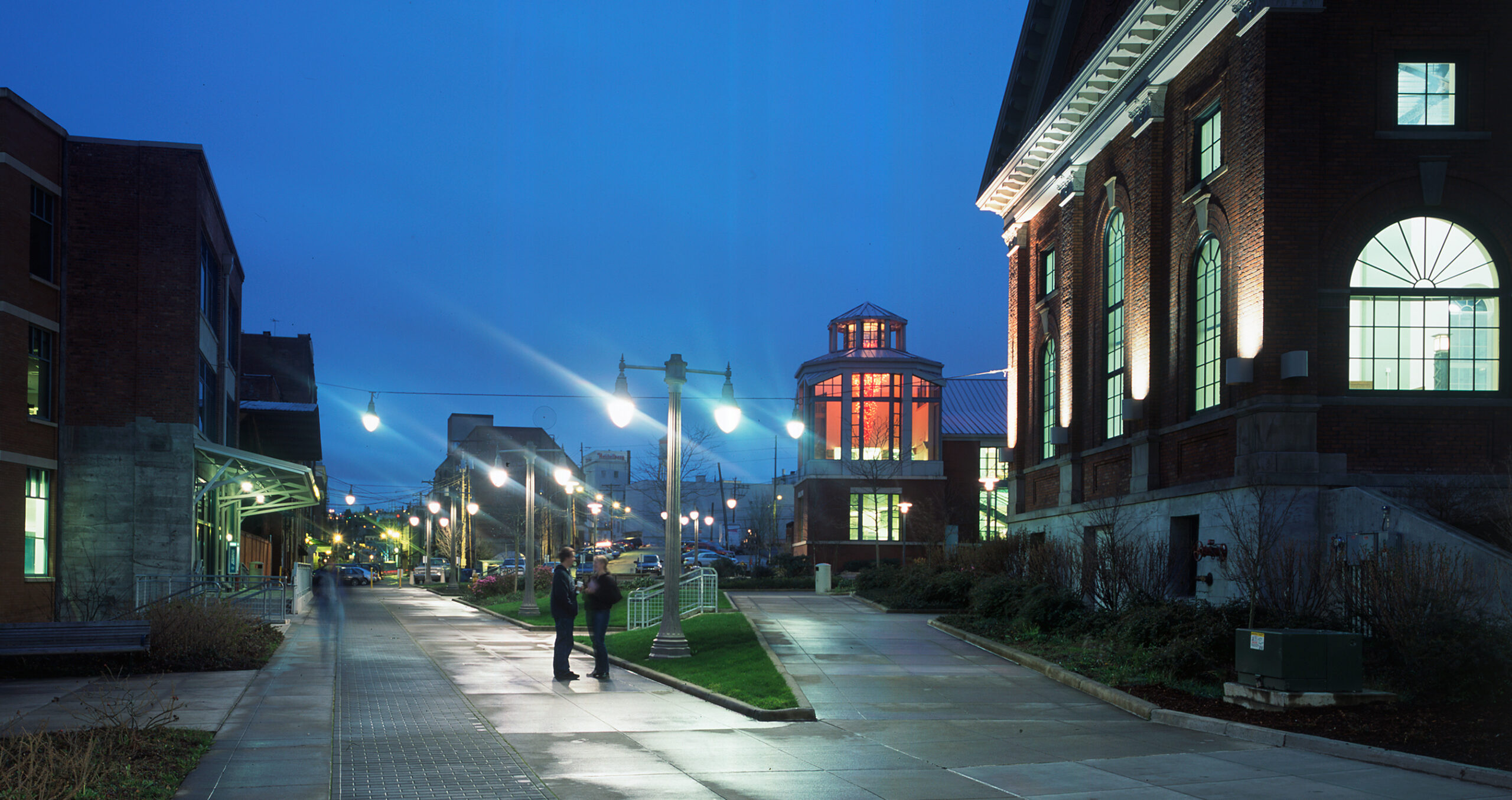 Renewing a warehouse district as a new urban campus. University of Washington, Tacoma. Photo Credit: Timothy Hursley
While the role of the library as a cultural repository has been sustained through recorded history, its form, patronage, and customers have shifted with the structures, hierarchies, and priorities of societies. Libraries continue to survive and thrive through their protean nature and expression of societal values. They continue to meet the needs and to inspire the aspirations of individuals and communities.
The role of the library in society is continuously shifting. It has been public and private, religious and secular, imperial and popular, academic and civic. It has been the domain of the aristocracy, of the church, of academe, of civic engagement. Even when it has not been a democratic and popular resource, it has still benefitted society and future generations through its stewardship and preservation.
Through the cycles and disruptions of history, the library has emerged at various times and in varying forms, as an apogee of cultural achievement. Looking back, the genius of these accomplishments rises like the peaks of a mountain range reaching up through the clouds. The libraries of Ashurbanipal and Alexandria were towering achievements of global reach. The Library of Pergamon perfected the new technology of parchment, renowned for its archival durability. Villa Papyri, in Herculaneum, survived the eruption of Vesuvius and is slowly yielding the insights of its ancient scrolls through Computed Tomography (CT) scanning.
The monastic libraries of medieval Europe played an extraordinary role in the preservation and dispersion of ancient literature and knowledge that still informs and inspires our lives.
The Abbey Library of St. Gall has survived since its founding in the 8th century as a treasury of medieval and classical manuscripts. The Abbey Library of Montecassino (ca. 529) had an essential role in preservation and reproduction of classical texts through the extraordinarily refined work of its scriptorium.
In his beguiling book, The Swerve: How the World Became Modern, Stephen Greenblatt elucidates the role of the monastic libraries and scriptoria in preserving ancient classical literature and philosophy. He describes the dual role that monastic culture played in both preserving ancient wisdom and suppressing its dissemination due to its “pagan” heresy.
For centuries, Islamic libraries were enlightened in their collection and perseveration of knowledge across many ancient civilizations. Their translation from Latin, Greek and Sanskrit texts were unique in salvaging great works of early classical culture. The Bayt al-Hikmah, or House of Wisdom, in Bagdad preserved Aristotle, Plato, Hippocrates, Euclid and Ptolemy, among many brilliant works, protecting them from loss and translating them into Arabic throughout the 8th and 9th centuries. Much of this treasury was foundational to Renaissance cultural resurgence.
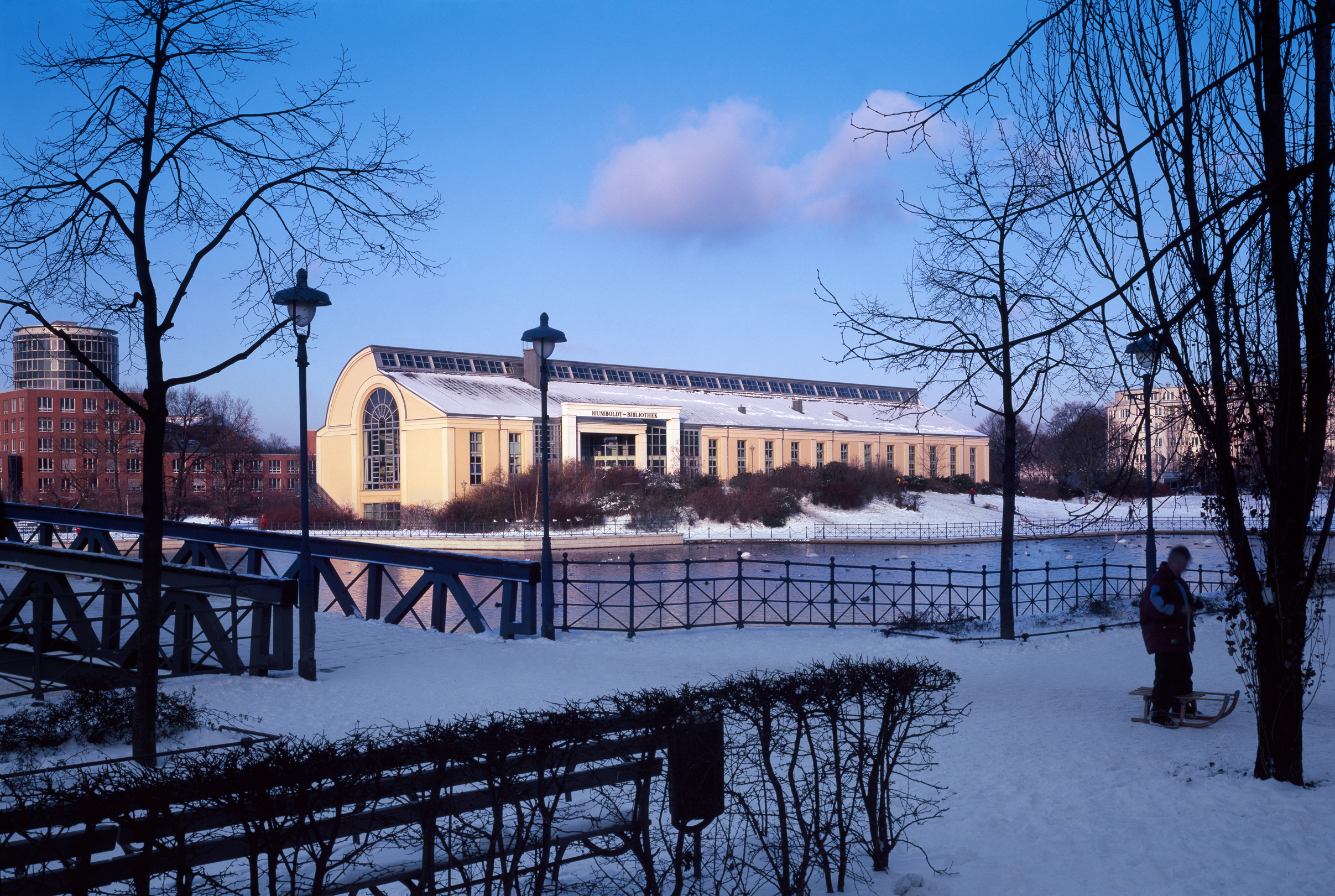
Humboldt Bibliotek houses the neighborhood library and cultural center in a building inspired by industrial loft prototypes. Photo Credit: Werner Huthmacher
In the peaks of cultural reach, libraries have often been amongst society’s greatest achievements as art and architecture. From Michelangelo’s refined mannerist Laurentian Library, to Labrouste’s structurally and spatially innovative Bibliothèque Sainte-Geneviève and Bibliothèque Nationale, to Alvar Aalto’s many libraries, artfully washed in daylight, and Kahn’s elemental and stately Exeter Library, architects and patrons have found libraries to be a paradigmatic intersection of civic, intellectual, and artistic aspiration.
While these cultural paragons are vivid inspirations, ennobling their societies, there have, of course, been valleys of great depth and depredation. The destruction of libraries and the burning of books have marked extremes of intolerance, from Savonarola’s Bonfire of the Vanities 1497 cultural purge in Florence, to the Third Reich’s conflagration of “un-German” books across the country. It reminds us of José Marti’s warning that “those who love, build and those who hate, destroy.”
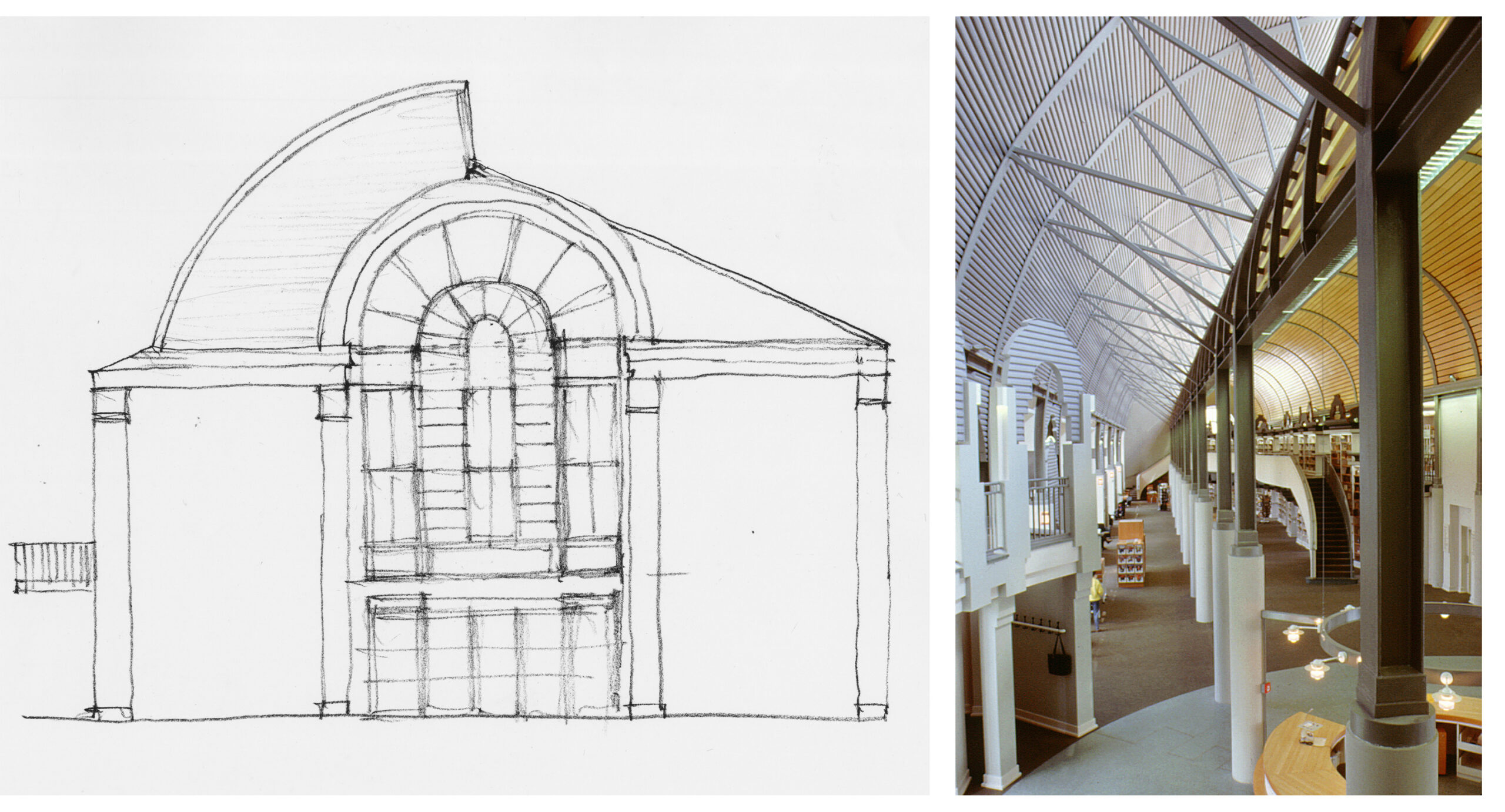
Exposed structure and vaults wash daylight deep into the building. Humboldt Bibliothek Photo Credit: Moore Ruble Yudell (left) / Timothy Hursley (right)
The cycles of a culture’s history can be read in the lives of their libraires and in the ways in which they are valued, invested in, and serve their communities. The light and dark of a civilization can be embodied in our approach to civic life and even in the life and works of an individual. Andrew Carnegie’s Manichaean world embraced brutal working conditions of twelve-hour days for six and even seven days a week, crushing unions and dissent, all in service of building an unprecedented fortune. All this was, paradoxically, contrasted by the legacy of his exceptional philanthropy in building more than 2,500 free public libraries. They have, arguably, served and inspired millions of patrons over the last 137 years.
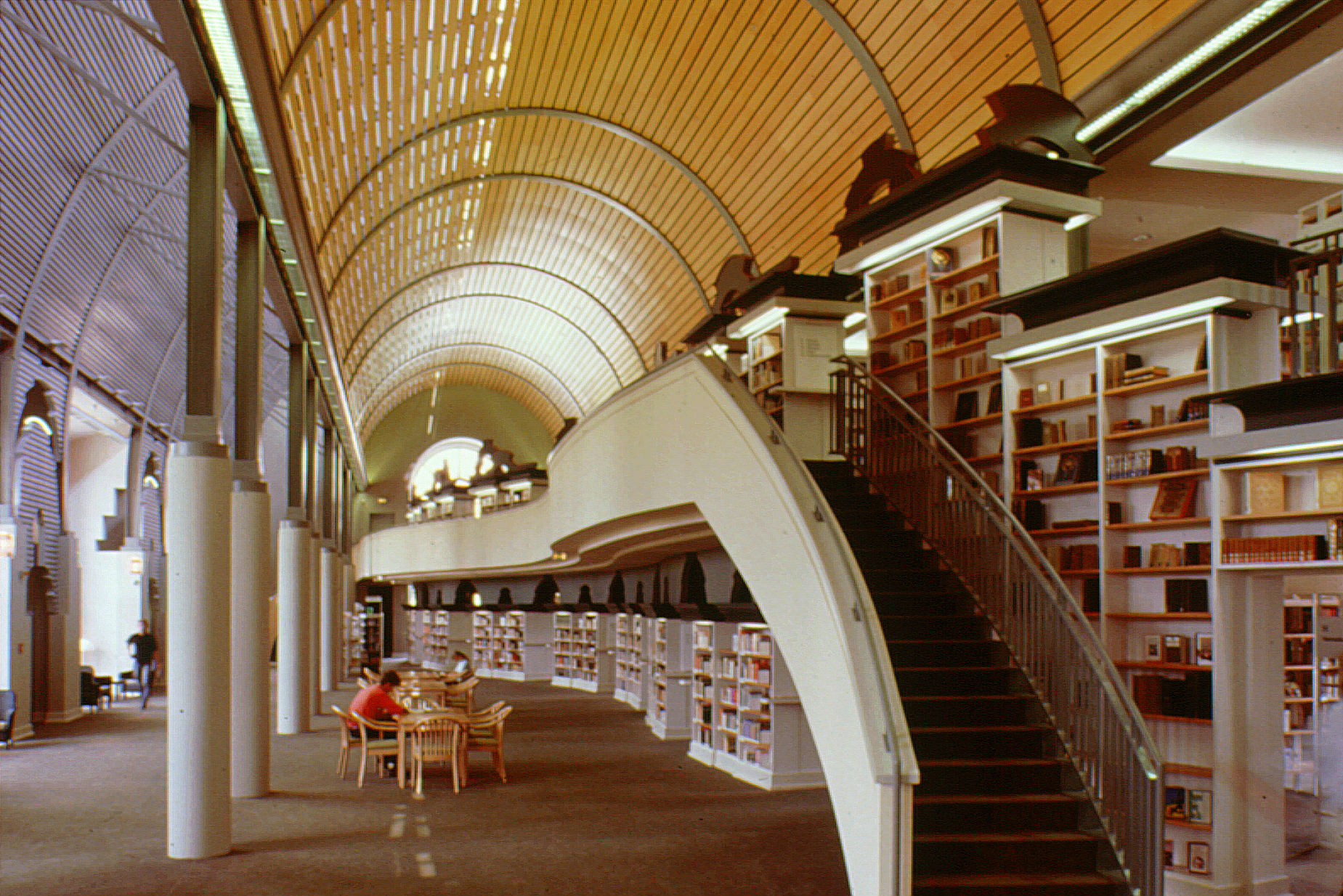
A meandering wall of books gives access to open stacks and quiet study areas. Humboldt Bibliothek. Photo Credit: Timothy Hursley
As the role of libraries in communities evolves, civic, cultural, and educational programs increasingly inform libraries as the centers of community life and learning. For over forty years Moore Ruble Yudell has had the opportunity to explore the role of the library across a spectrum of societal needs. These have spanned civic, academic, research and specialized collections. They have included unlikely transformations like the conversion of the 1902 Snoqualmie power substation into a library and focus of campus life at the University of Washington, Tacoma, where we collaborated with LMN to masterplan the conversion of a 19th century warehouse district into a new urban campus.
Our public libraries have increasingly served as cultural centers. At the Humboldt Bibliothek in Berlin, the neighborhood library is a venue for exhibitions, concerts, and forums. The library celebrates a loft-like openness with extruded vaults washing clerestory daylight deep into the space, providing warmth and comfort in this northern climate.
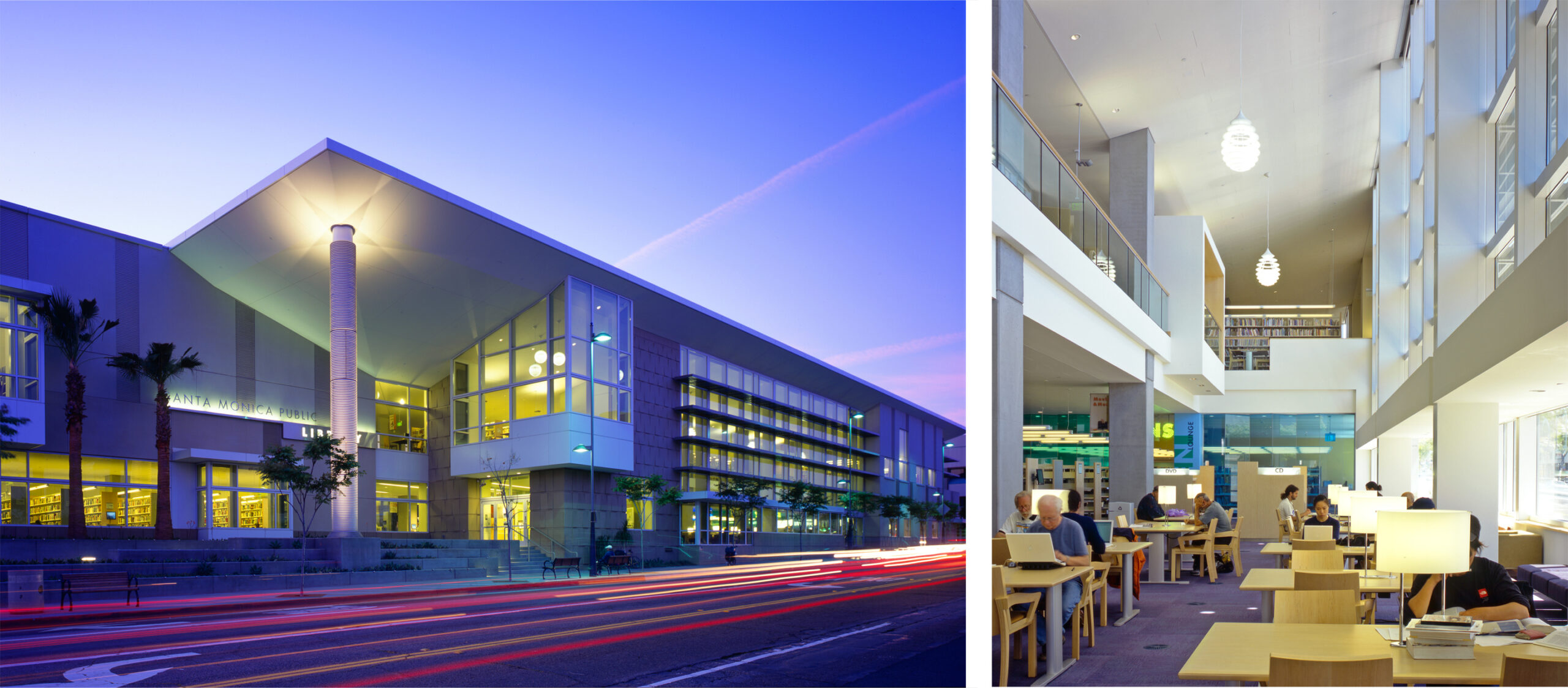
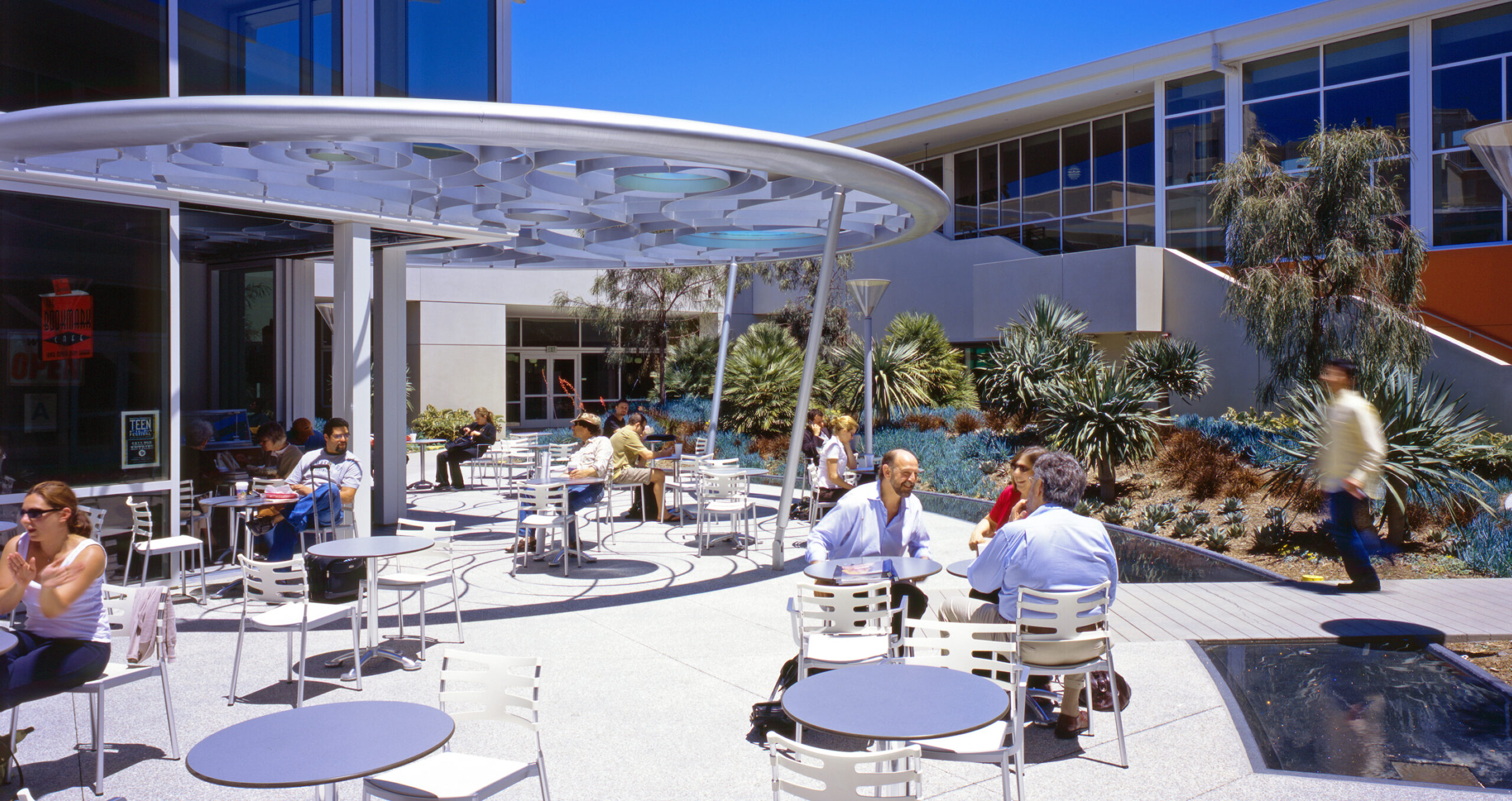
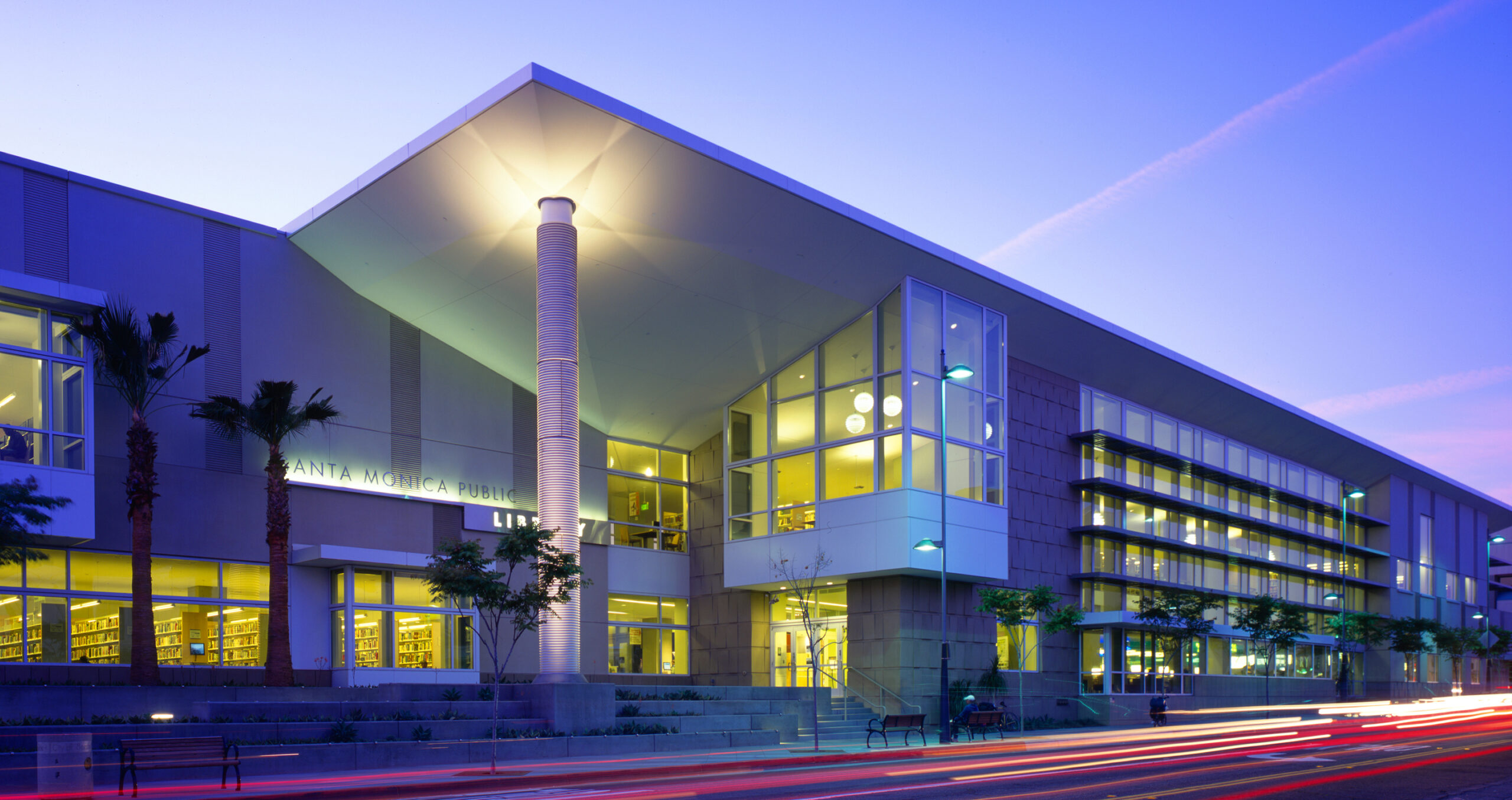
Passive design strategies provide shade, natural ventilation and water reclamation. Spaces flow freely connecting interiors to courtyards. Santa Monica Main Library. Photo Credit: John Edward Linden
In Santa Monica, the main public library pushed the boundaries of sustainable design, while creating a new civic “living room” that has been embraced regionally. Here the benign climate allows for the library to flow into courtyards of native planting with informal spaces served by a shaded outdoor café.
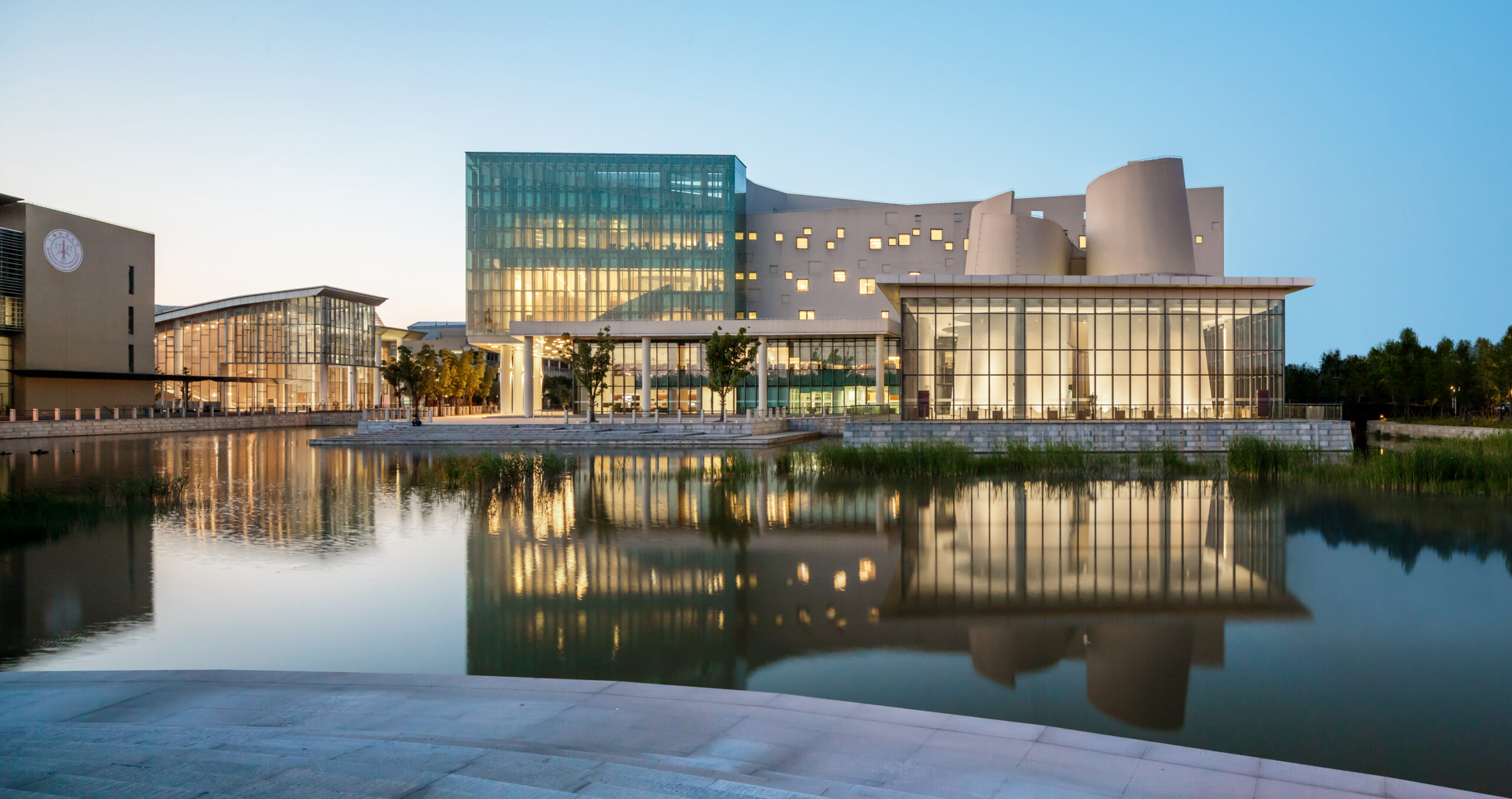
The main campus library reflects “illumination” in the water. ShanghaiTech University Library. Photo Credit: Colins Lozada/Moore Ruble Yudell
Our academic libraires increasingly expand teaching, gathering, and student support, all served by emerging technologies. Diverse services compliment the more traditional and timeless ways of study, research, and learning. Our recent master plan and design for the new Shanghai Tech campus envisioned the main library as an iconic center of student life. It sits at the intersection of academic buildings, student services and housing. Canals and rain gardens capture and filter water, evoking the historic “water towns” of the low-lying Shanghai region. Water reflects the “illumination” of the library, while the curved surfaces of a study pavilion, inspired by the tradition of ancient scrolls, wash light gently through the space. The library embodies the dualities of traditional and modern technologies.
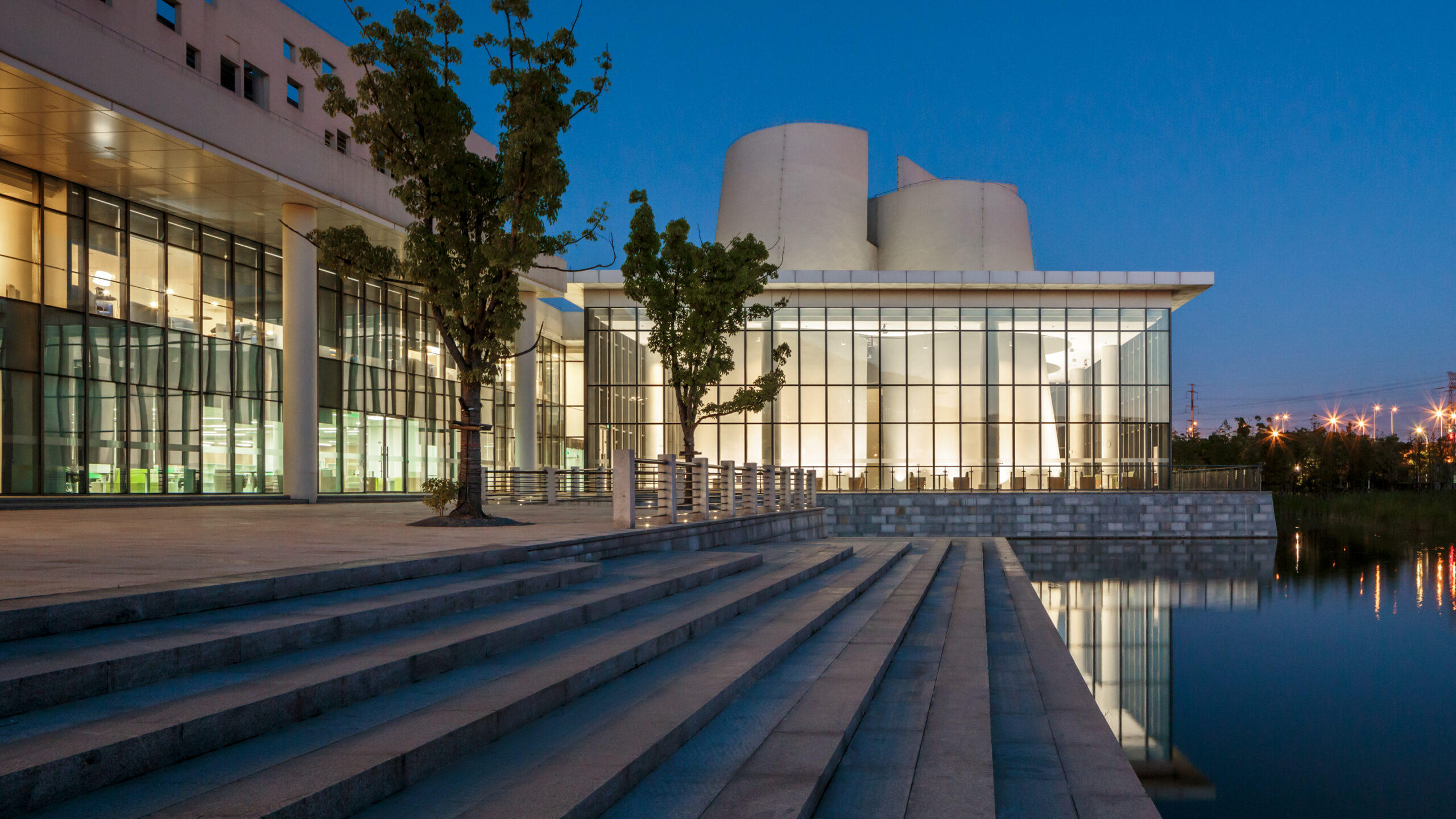
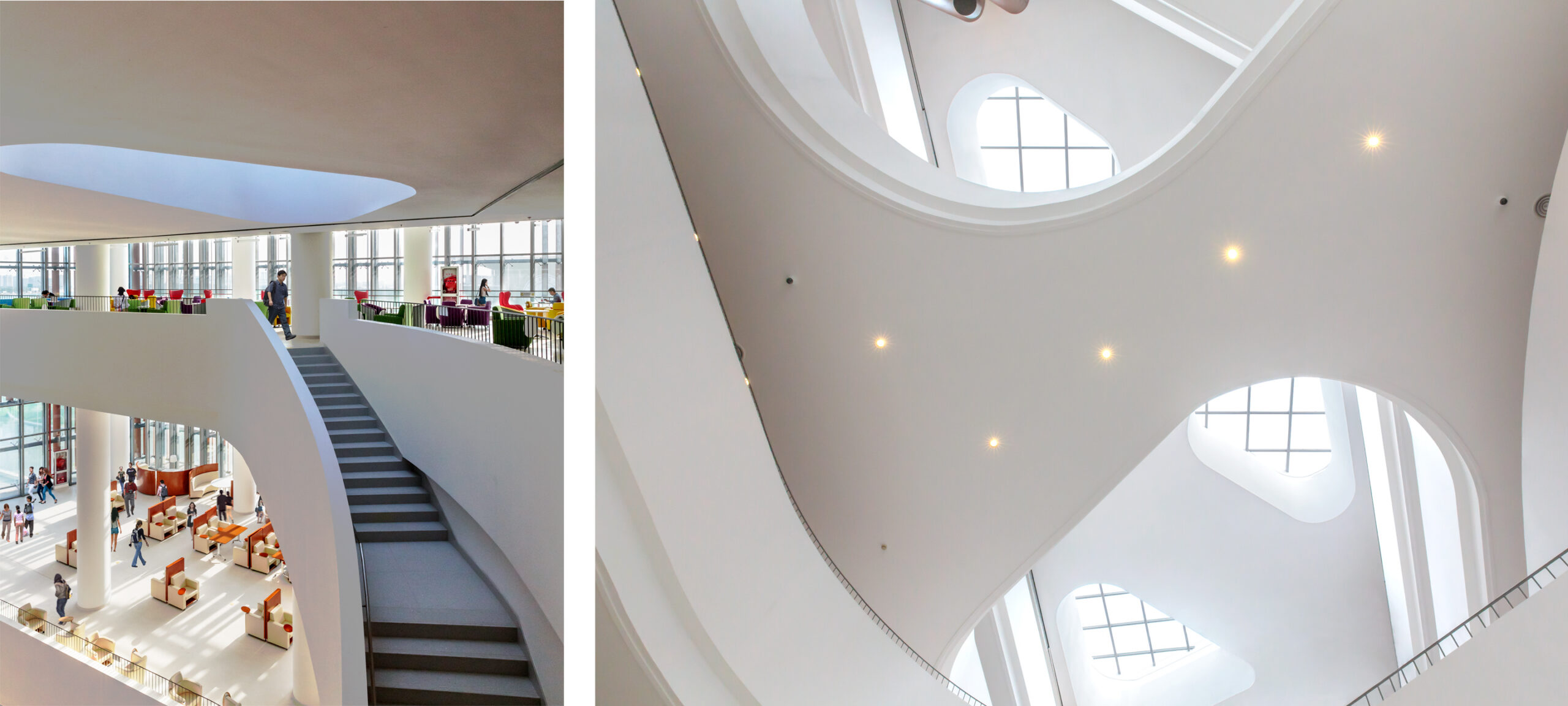
Curled surfaces recall ancient scrolls and wash daylight into study areas. ShanghaiTech University Library. Photo Credit: Colins Lozada/Moore Ruble Yudell
Restoring and Renewing
Recently we have been immersed in revitalization of historic libraries at radically differing scales. We are restoring and renewing the historic Carmel-by-the-Sea Harrison Memorial Library designed by the Bernard Maybeck in collaboration with the designer-builder Michael J. Murphy. Our work is founded on extensive outreach and participatory workshops with a small but highly engaged community. We are reviving the spirit and experience of this historically significant library that serves as a focus of civic life, polishing a gem, while expanding its capabilities and preparing it for its next hundred years of service.
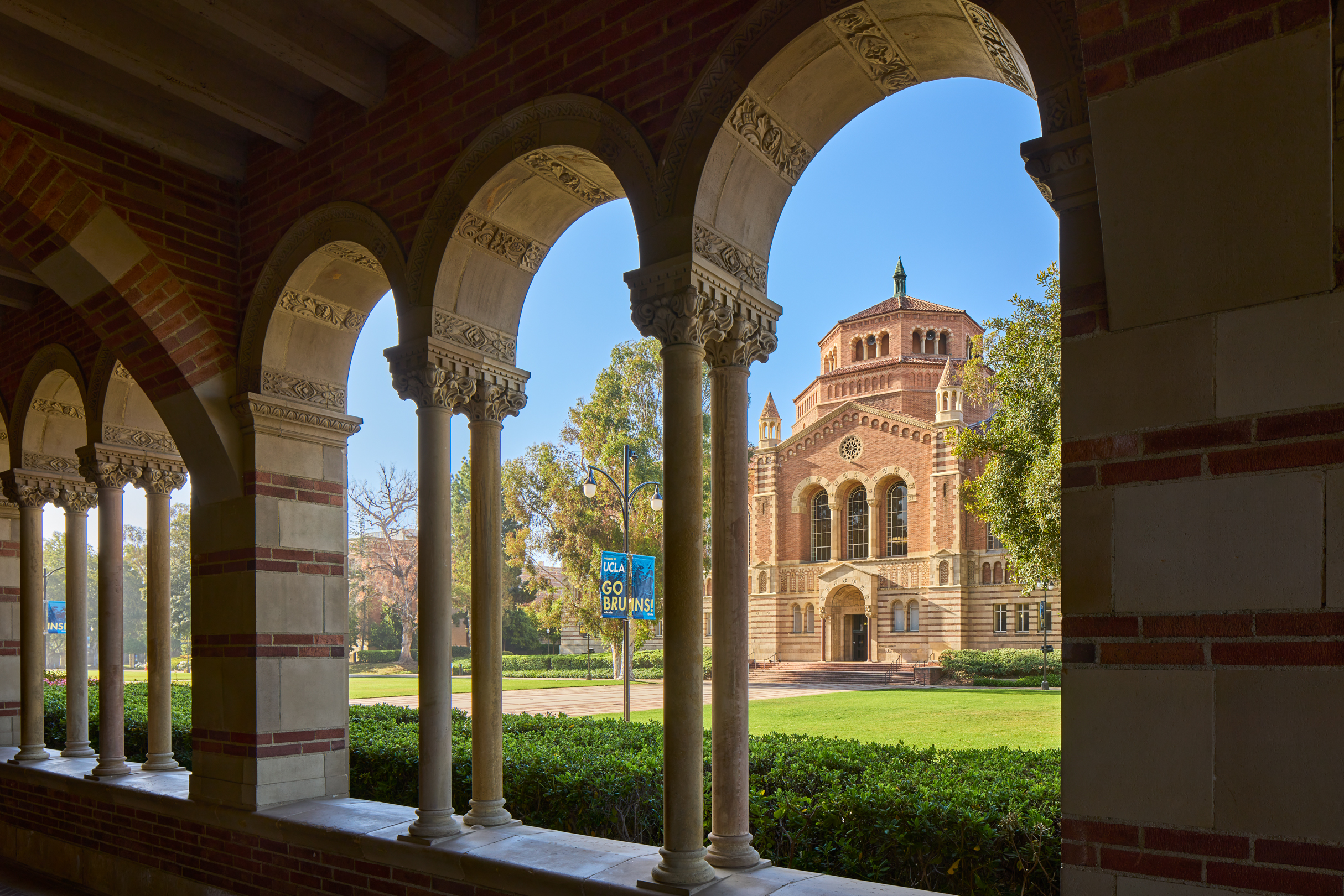
At a much larger scale, the UCLA Powell Library also approaches its centennial of service as the central campus library. The life cycle of this building is a rich reflection of a century of change, transformation, and renewal. We have been collaborators in this work for over thirty years, to the point that we feel a visceral connection to the life and vision of this library.
Powell Library is one of the four original and most distinguished buildings on the UCLA campus. Built in phases starting in 1927, with architect George W. Kelham, it continues to evolve, to better serve the needs of the campus and student communities.
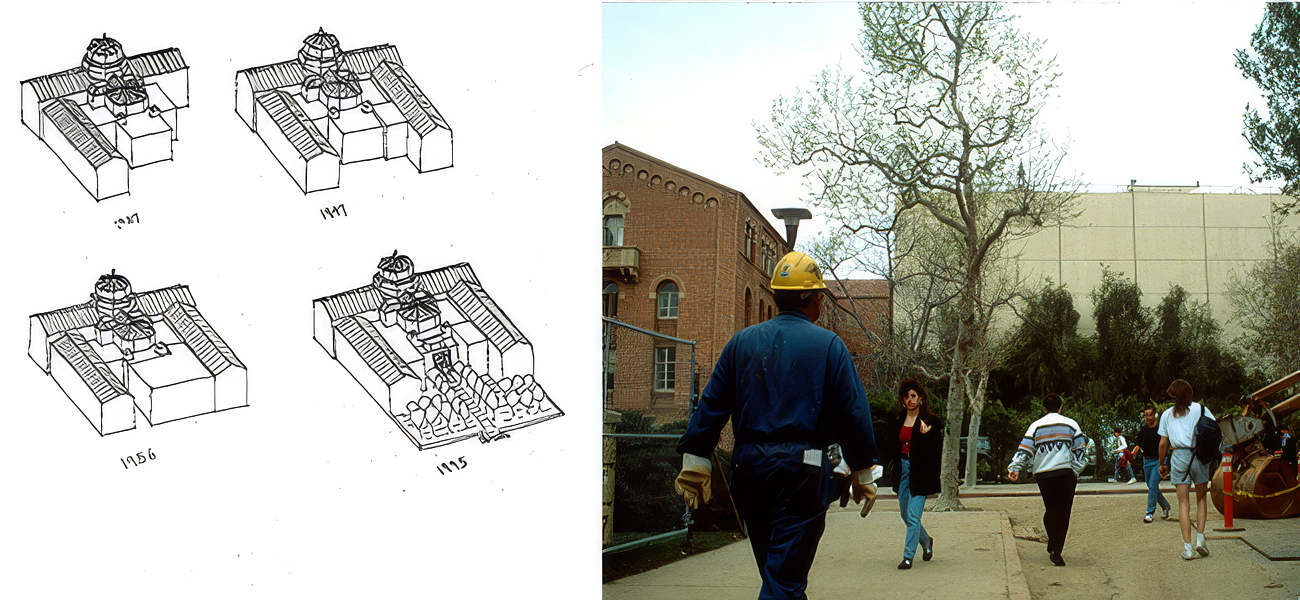
UCLA Powell Library expanded from 1927, with a bunker of stacks added in 1956. Photo Credit: Moore Ruble Yudell
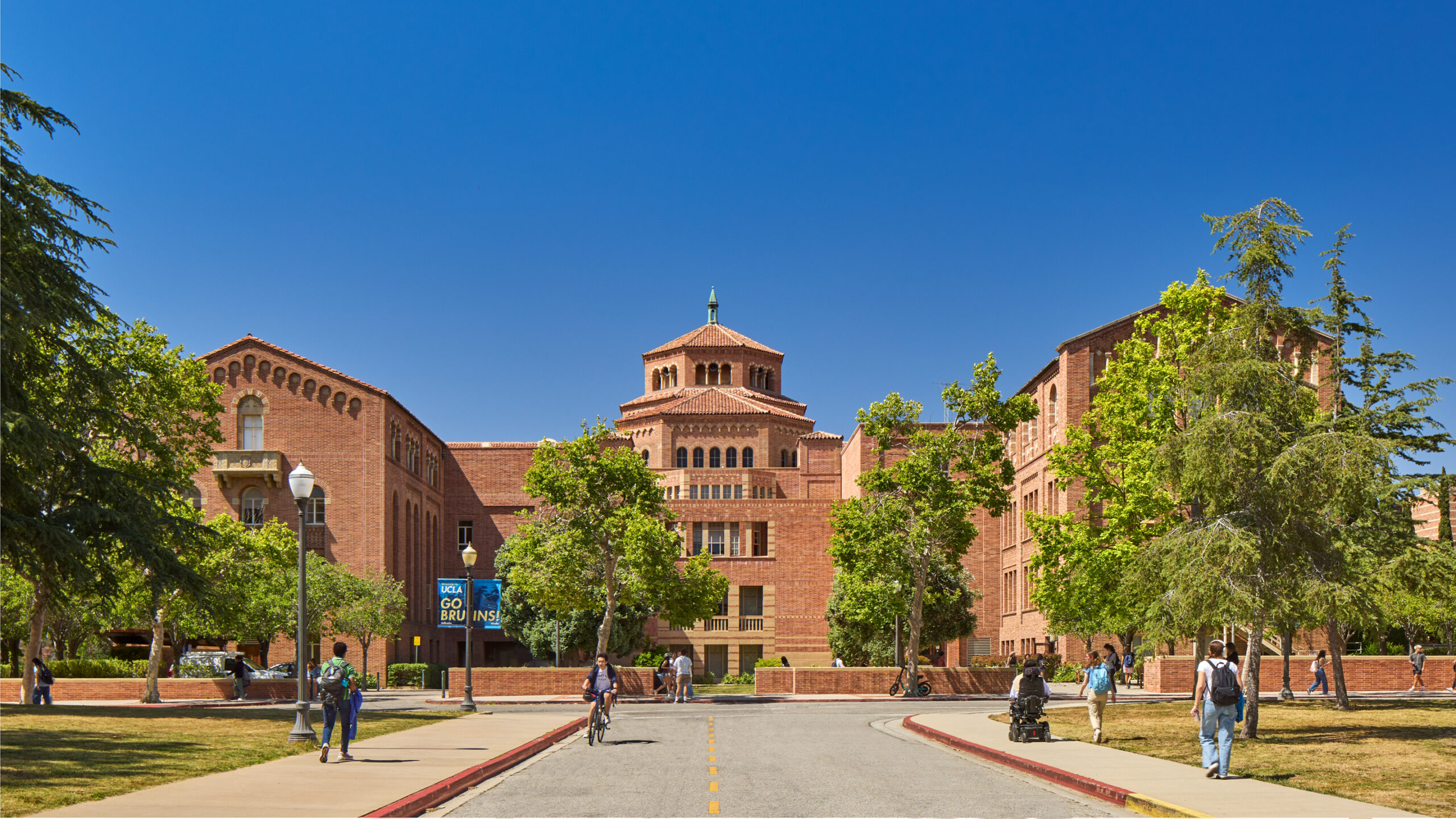
Replacing the non-conforming closed stacks with a smaller addition and courtyard, brought new life to the south district of campus. Photo Credit: Colins Lozada/Moore Ruble Yudell
Our original work on Powell began with seismic, accessibility and life safety improvements. UCLA has long had a very sophisticated approach to “leveraging” such technical and safety improvements to simultaneously update building systems and technology and to reprogram space and functions to meet contemporary pedagogic and social needs. This led to replanning the entire building for the most effective uses of space and to enhance the experience of all library users.
In analyzing the space use of the whole building, we were able to convert the library to open stacks with comfortable study areas. We removed the 1950’s bunker from the south side of the building, replaced it with south facing study areas, and converted a loading area to an important new south facing landscaped courtyard that supports long term campus planning for connectivity and social space. The new south reading rooms bring light deep into the formerly dark spaces, connect to nature, and establish the location for a future south entry to serve growing campus districts. Materials, proportions, and details were carefully composed for the new south addition to become a sensitive, yet fresh, complement.
This work in the early 1990’s expanded Powell Library’s role, connecting people and supporting a vibrant place in campus life. It was recognized with a National American Institute of Architects Honor Award, the first UCLA building to be so honored.
Collaborative Visioning
Our more recent work began in 2015 as visioning for the next phase of renovation and adaptive reuse of Powell, with the goal of continuing to shape the spaces for emerging pedagogic directions and an even greater focus on all aspects of the student experience. The process engaged a broad representation of the campus library, administrative, teaching and student community. Ideas and observations developed in workshops, formed the “raw data” that was the foundation for improvements to Powell’s physical and technological framework. All investigations and options were tested for how the library might grow to better serve its student community.
The library has seen a dramatic expansion and diversification of student use; increased interest in group study, collaboration spaces, and academic student support, including an expanded Undergraduate Writing Center, Student Research Assistants, and peer led support.
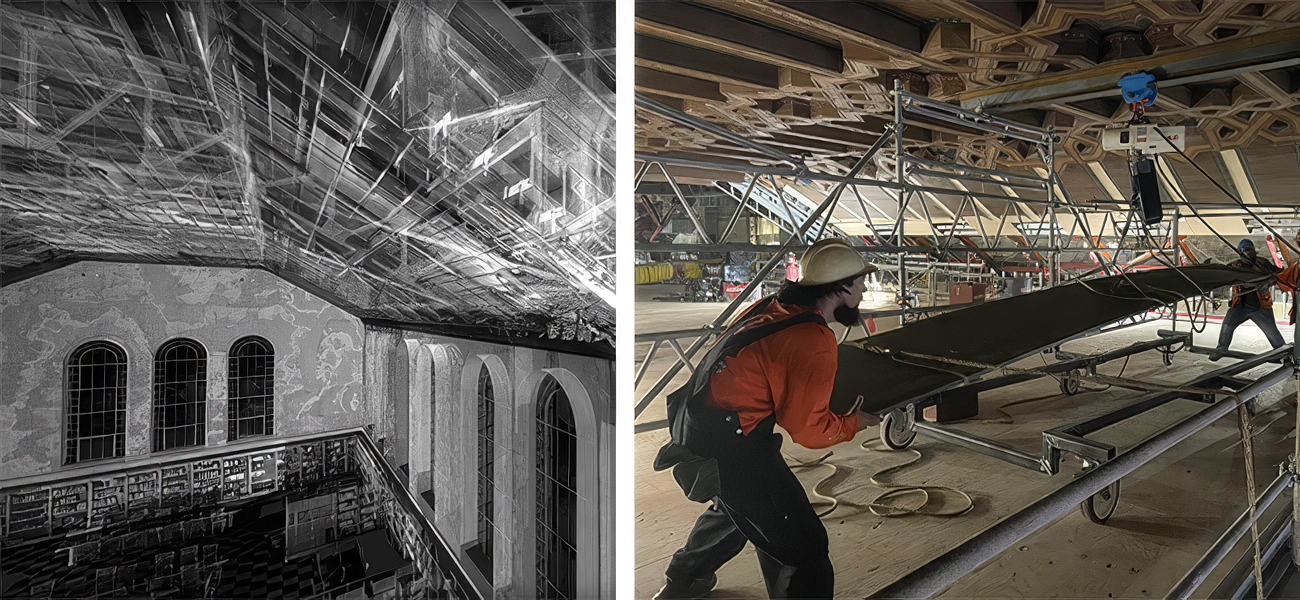
Ship-in-a-bottle Ingenuity: all reinforcing materials entered through one removed window opening. Photo Credit: AQYER (left) / Moore Ruble Yudell (right)
Subsequent feasibility studies for Powell led to our revised building programming, Tier 1 and 2 seismic studies, and detailed cost and phasing evaluations. This combined work enabled the University to plan for phased improvements for the next decade. We worked with the campus to leverage the currently limited funding sources to implement Phase 1 improvements for seismic, life-safety, accessibility, building code conformance, and work that will enable enhanced programming and technology for future generations.
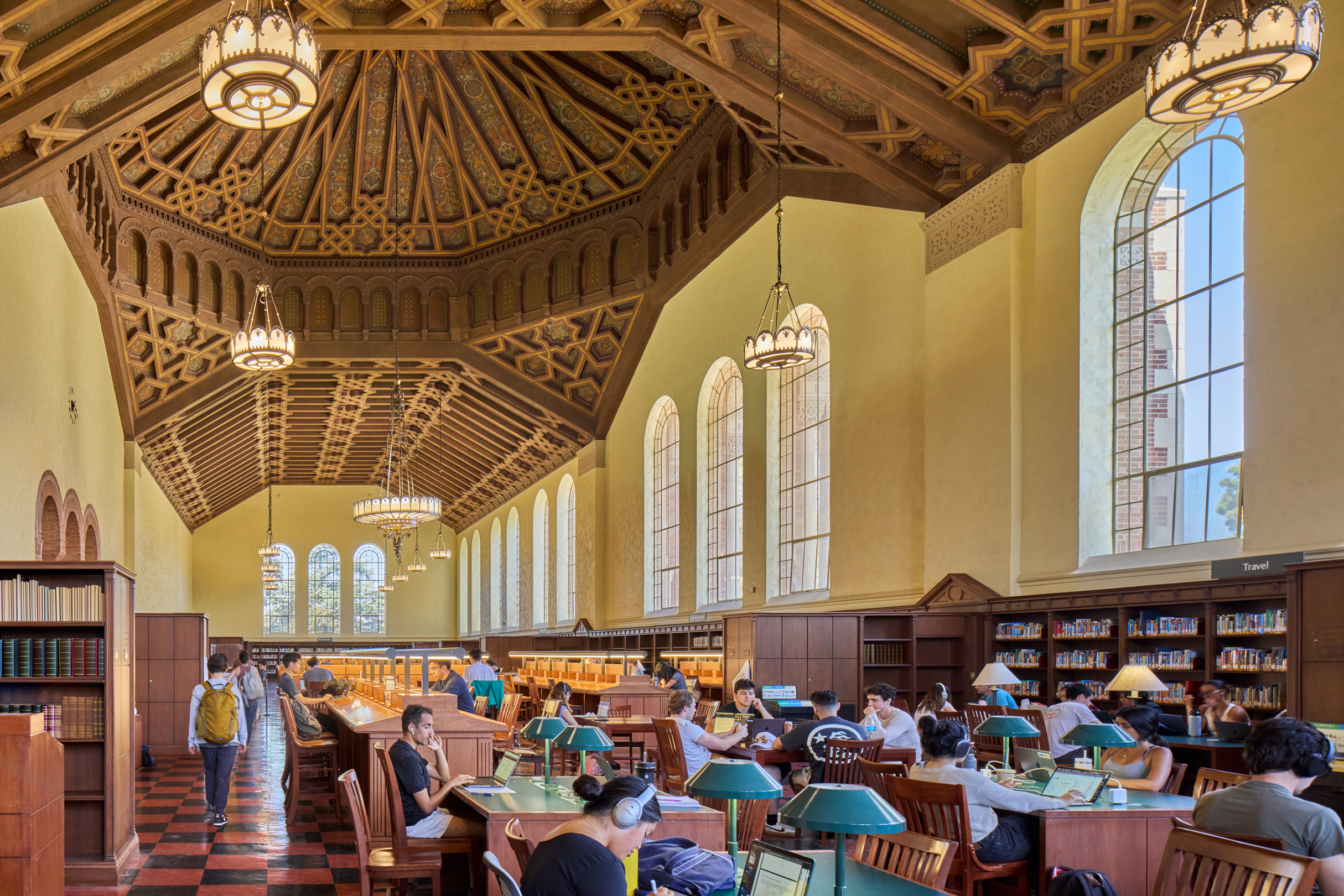
The Main Reading Room (after restoration in 2025) is an iconic campus focus, featuring a 212 ft. by 58 ft. frescoed ceiling. Photo Credit: Colins Lozada/Moore Ruble Yudell
Subsequent feasibility studies for Powell led to our revised building programming, Tier 1 and 2 seismic studies, and detailed cost and phasing evaluations. This combined work enabled the University to plan for phased improvements for the next decade. We worked with the campus to leverage the currently limited funding sources to implement Phase 1 improvements for seismic, life-safety, accessibility, building code conformance, and work that will enable enhanced programming and technology for future generations.
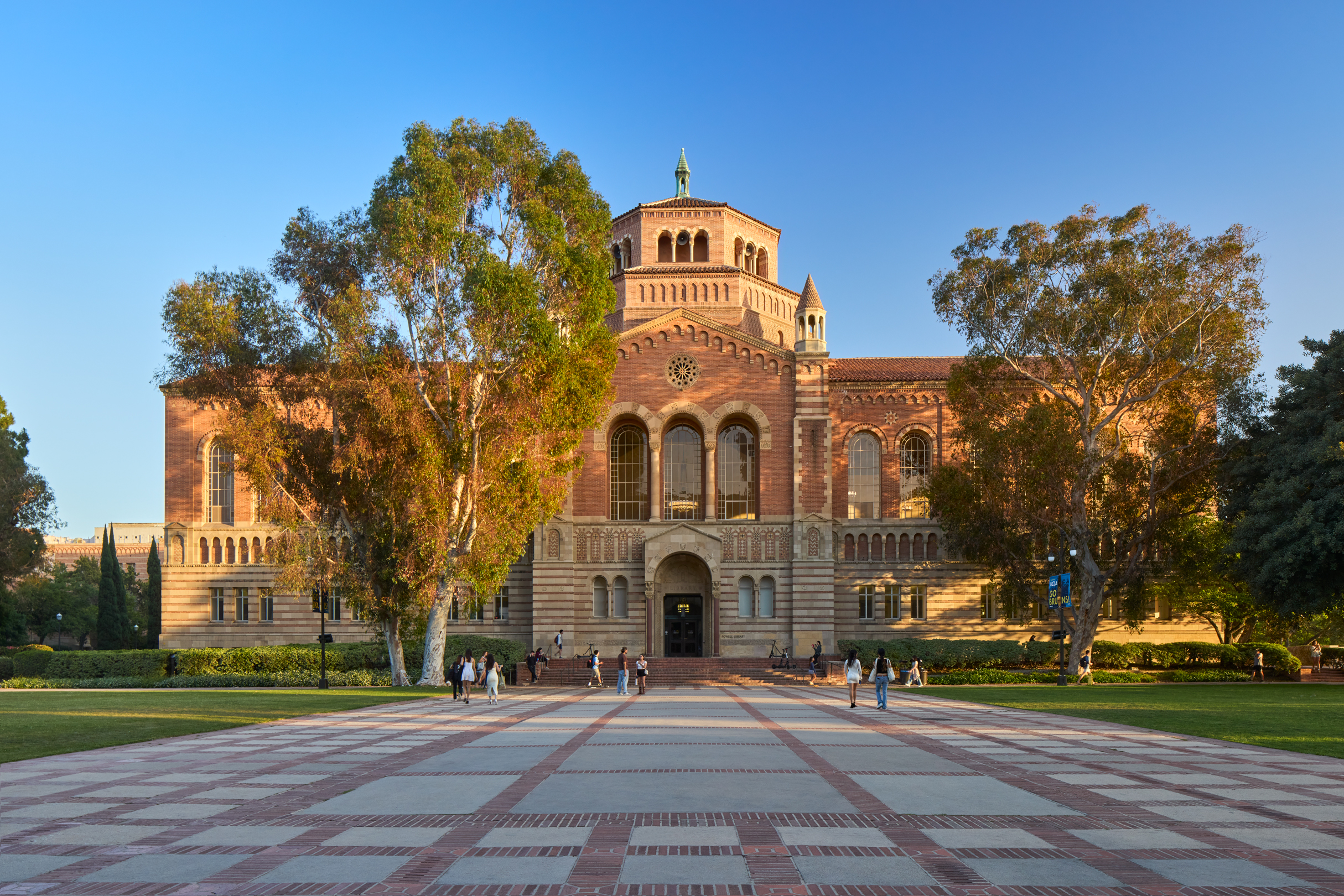
The historic fabric of Powell Library was fully restored while improving seismic performance, technology, and program. Photo Credit: Colins Lozada/Moore Ruble Yudell
“Through visionary rehabilitation and seismic strengthening, this literary icon at the heart of UCLA campus life will inspire generations of Bruins to come.”
-Los Angeles Conservancy Award Statement
As Powell approaches its centenary celebration, it serves the increasingly diverse and complex needs of a contemporary campus library, with expanded use, more welcoming spaces, and more sophisticated programmatic, technical, and social services.
We are delighted that this work has just been honored with an LA Conservancy 2026 Preservation Award and on May 8, 2026, will receive a California Preservation Foundation 2026 Award.
While UCLA’s Powell is the 170,000 GSF main campus library, serving 33,000 undergraduates, and Carmel’s Harrison Memorial Library is the city’s intimate 7,500 GSF civic jewel, our aspirations for both are similar: to understand and honor their 100-year legacy, to restore and renew them, and to prepare them to inspire and serve their communities with flexibility for the evolving opportunities of the next 100 years.
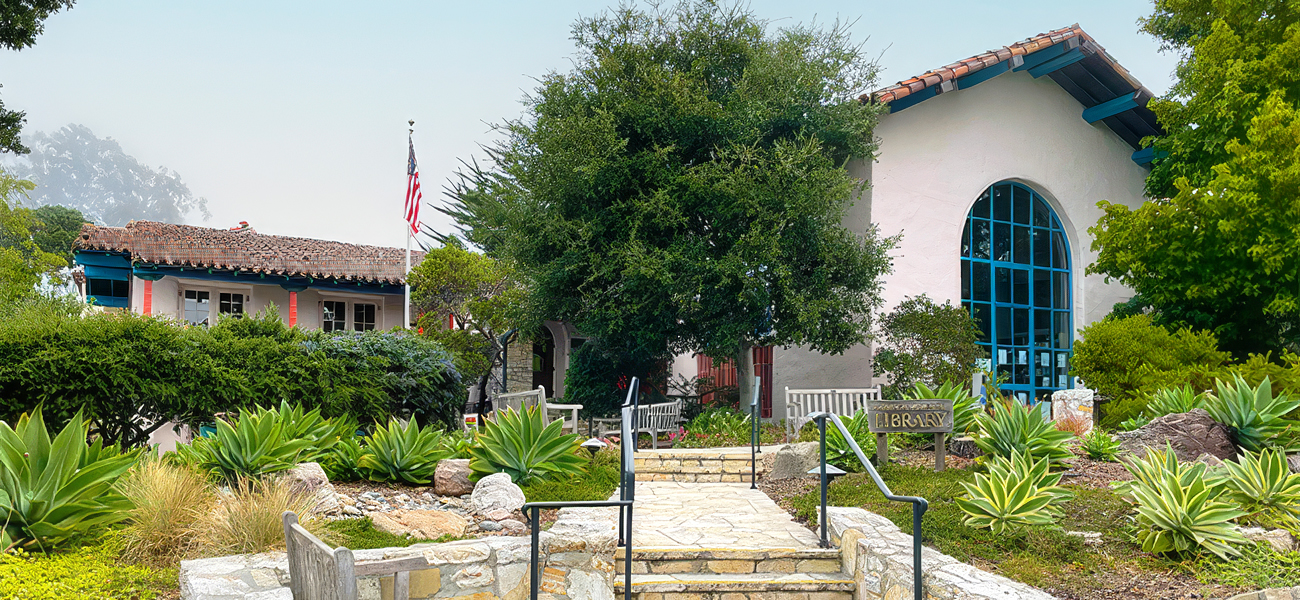
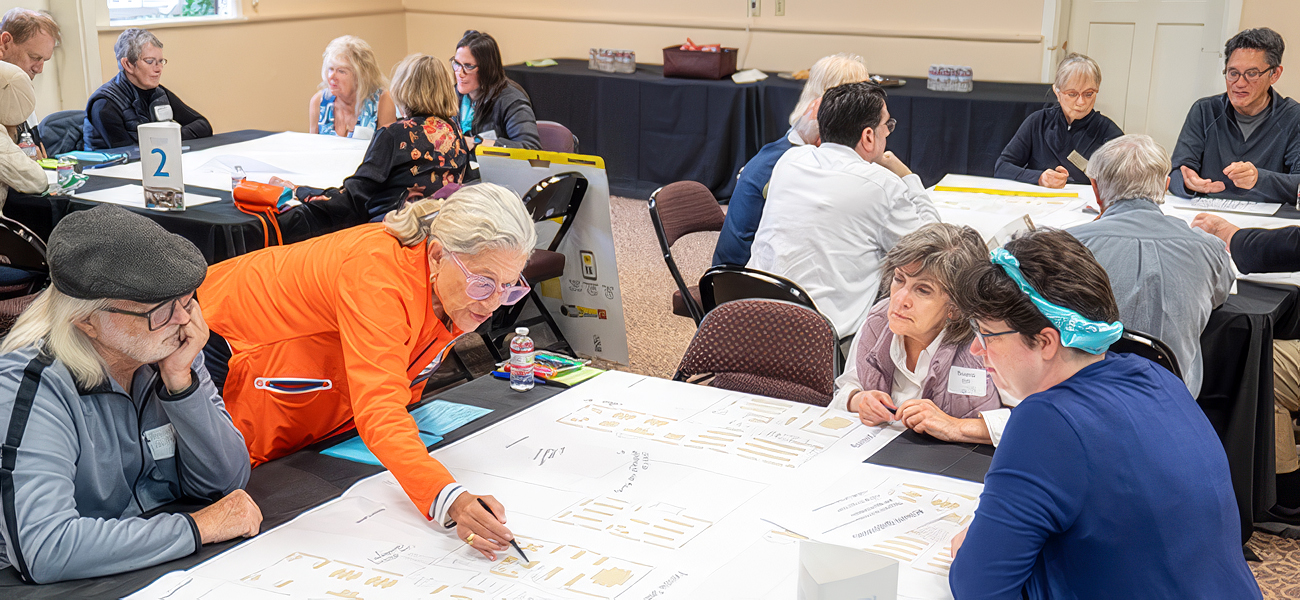
Robust community engagement formed the basis of the plans for restoration and revitalization of Camel’s Harrison Memorial Library. Photo Credit: Moore Ruble Yudell (top) / Richard Green Photography (bottom)
Buzz Yudell, FAIA collaborated with Neal Matsuno, FAIA, LEED AP BD+C, Chris Hamilton and Kaoru Orime on multiple phases of Powell Library. Currently Buzz, Chris, and Kaoru are leading the Carmel Library project. Buzz serves on the Board of Trustees of the British Architecture Library Trust (BALT) which supports programs of the Library and Collections of the Royal Institute of British Architects (RIBA), the pre-eminent architectural library worldwide.