- Role: Design Architect
- Building Area: 295,000 SF
- Cost: $107 M
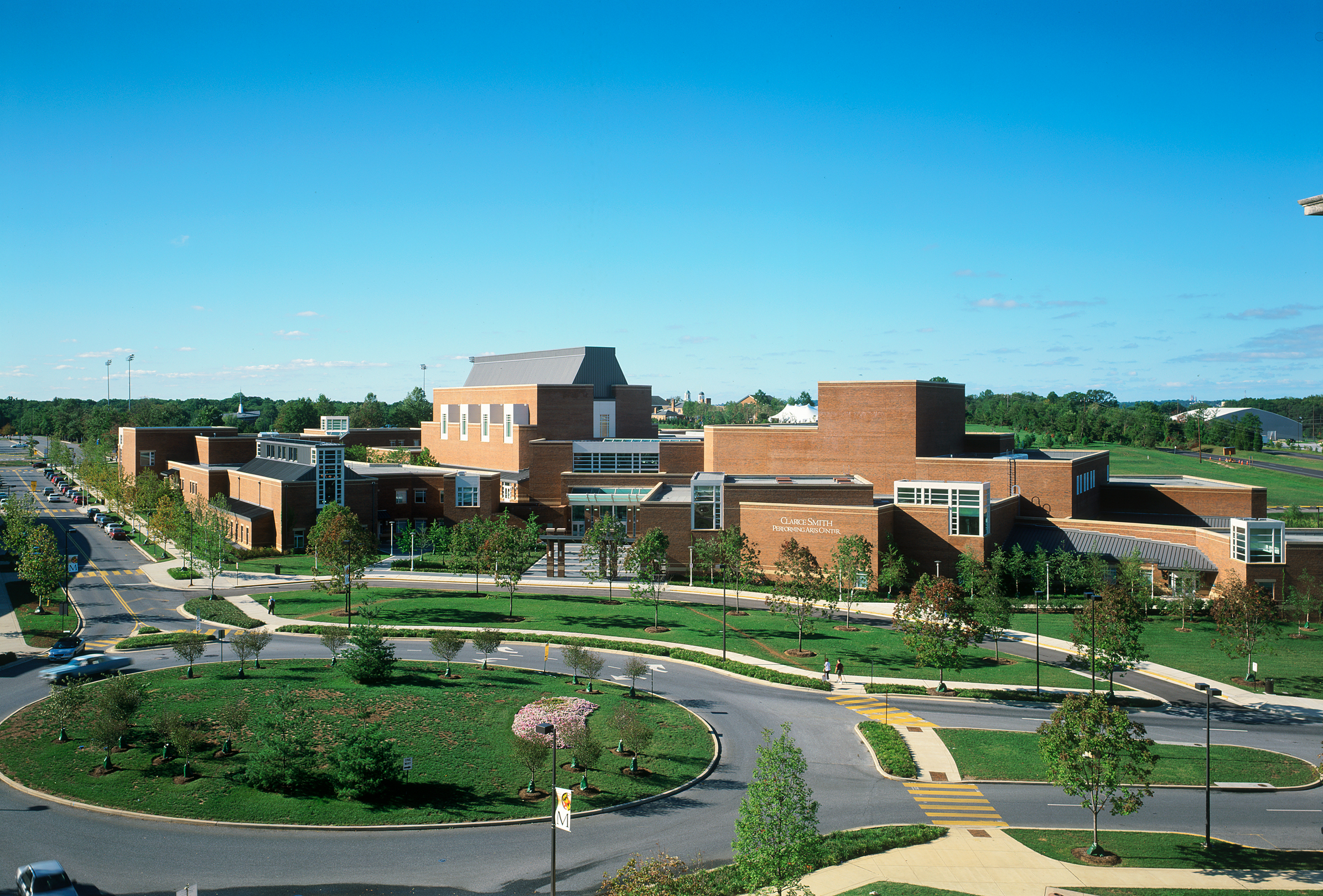
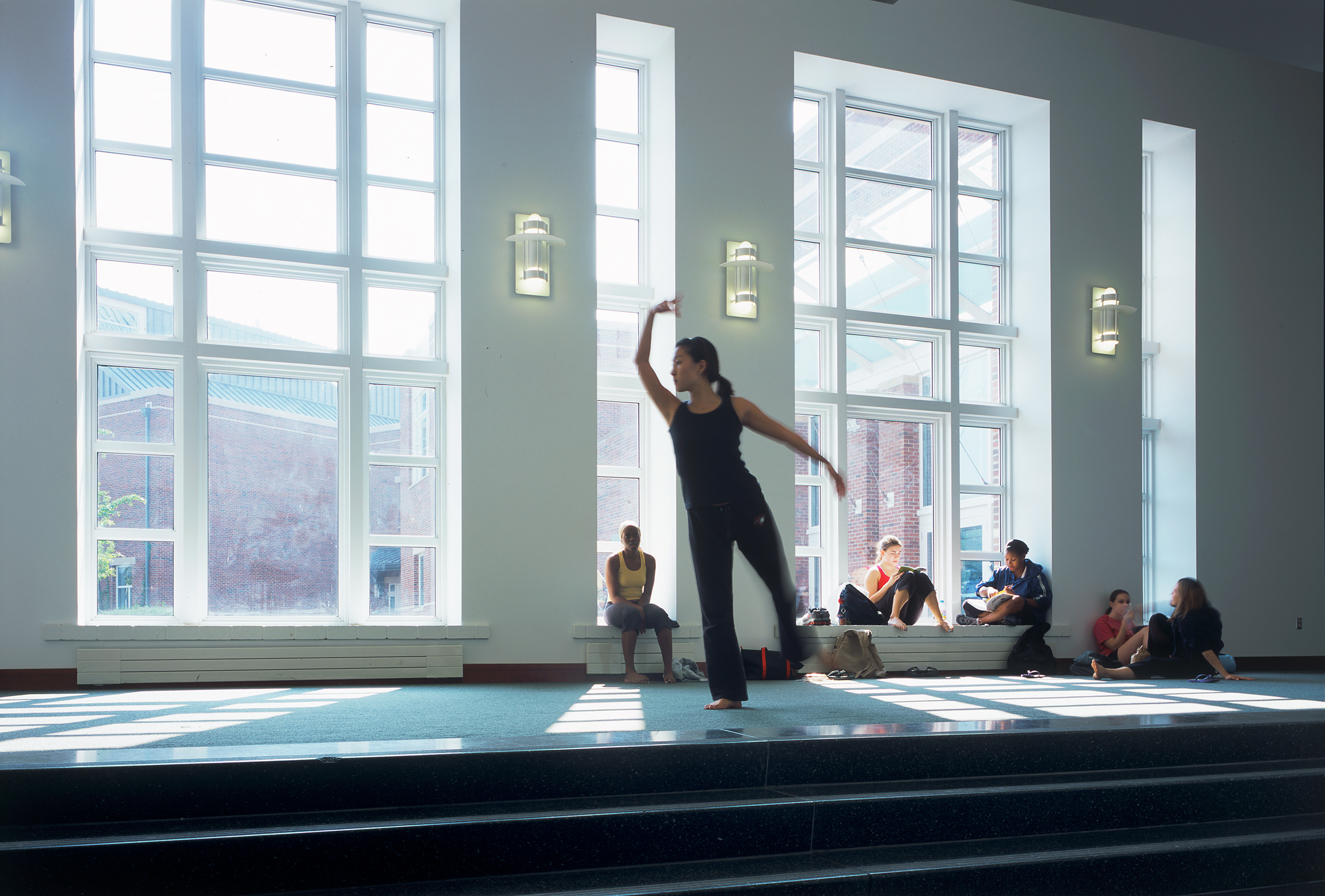
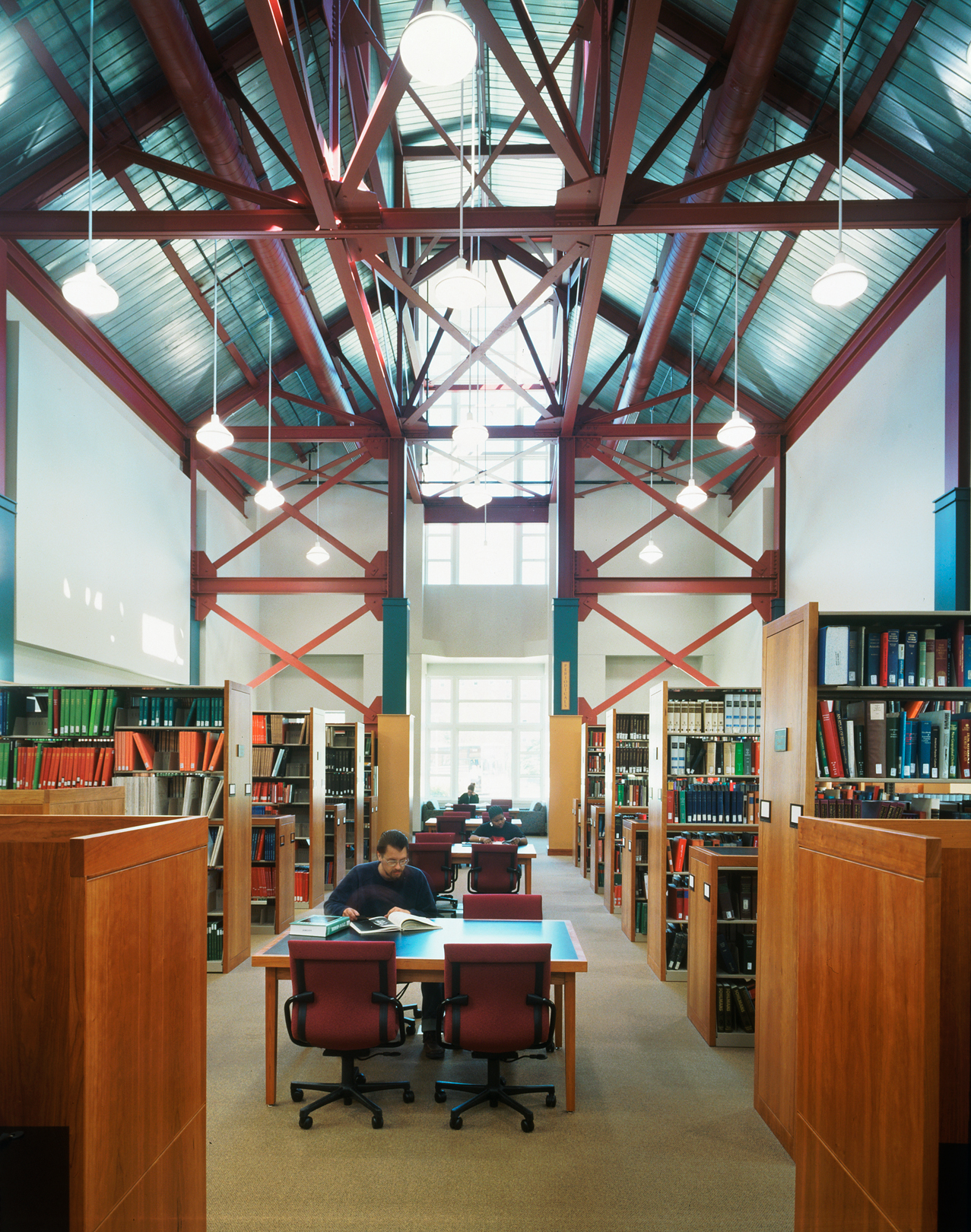
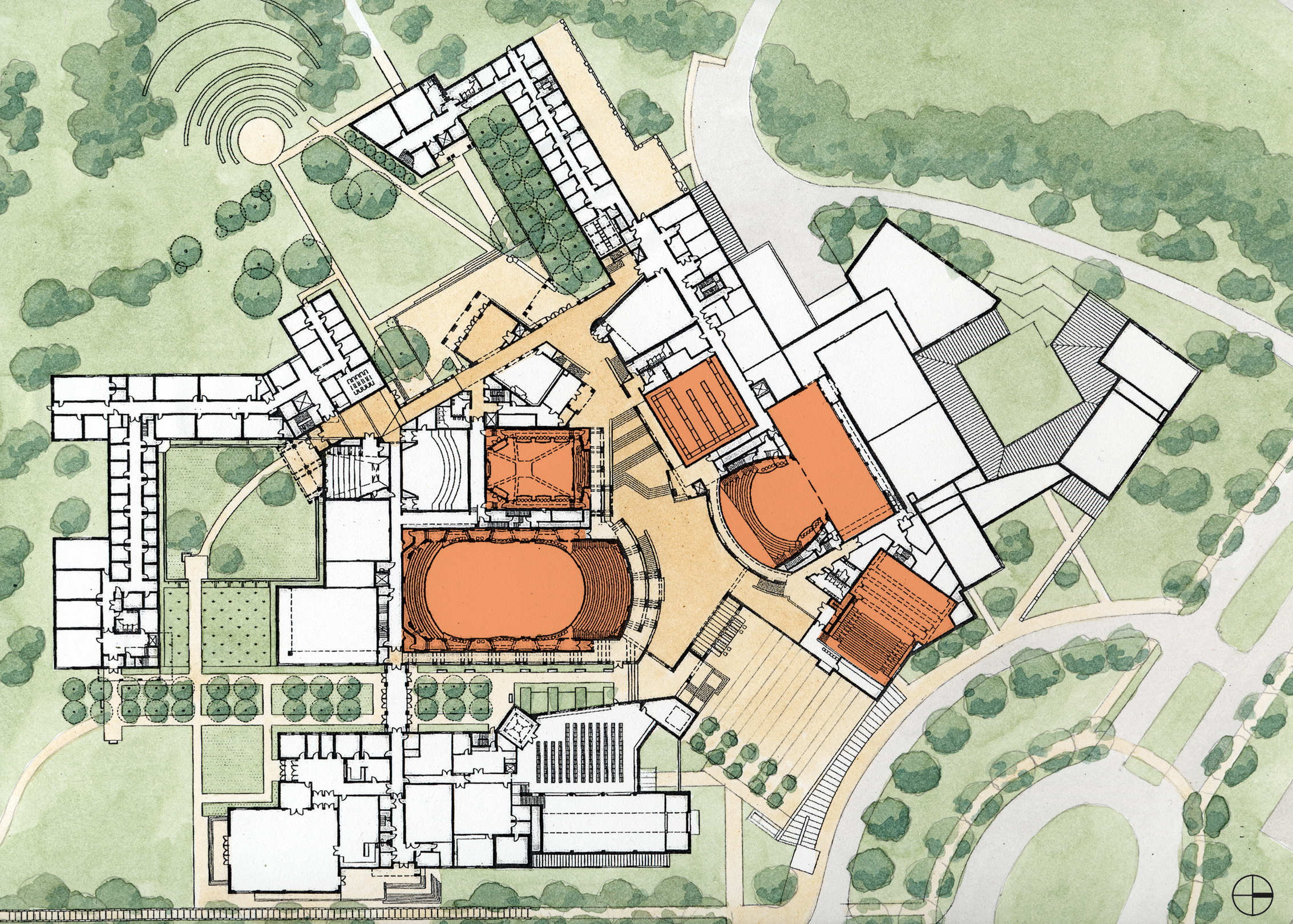
Our competition-winning design for the Clarice Smith Center for the Performing Arts enhances the fabric of campus life as it celebrates the broad range of performing arts on campus. As an integrated part of our West Campus master plan, the Center is conceived as a coherent whole that responds to extremely varied adjacent site conditions. Configured as an “academic village,” it is organized around open spaces and courtyards shaped to establish points of entry, enhance views, and provide a variety of social and activity spaces. The massing of the project reflects the primary design intent. Performance halls, departmental entries, lounges and the library are given strong readings within the whole, while support areas are expressed more quietly. The scale of the larger building elements is modulated by elements of intermediate height and low arcades, creating comfortably-scaled open spaces.
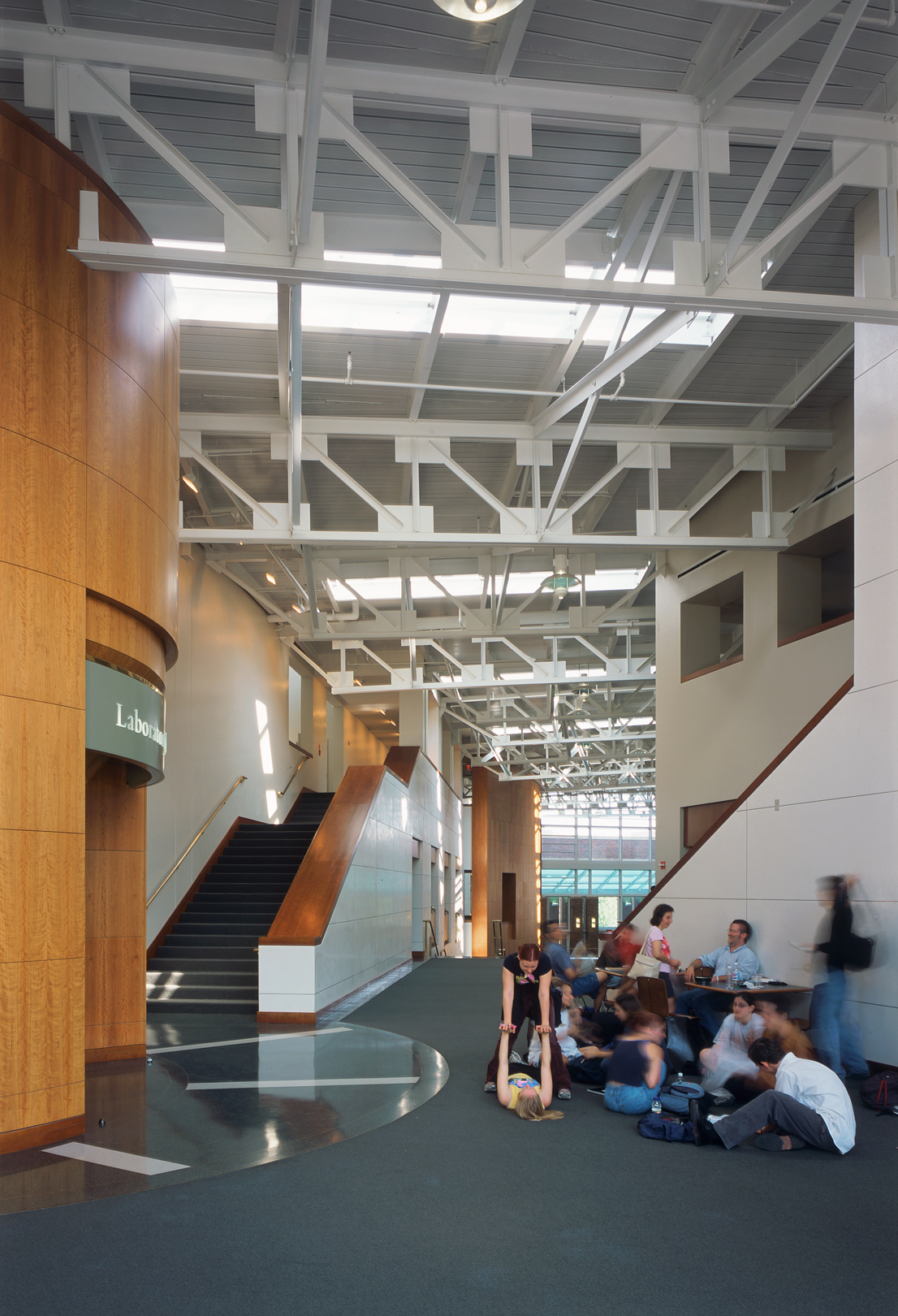
The major entry plaza for the Maryland Center for Performing Arts welcomes vehicles and pedestrians with entries to the library, music, theater, and dance departments. A grand processional sequence moves from this entry plaza, through a clerestory-lit lobby which serves as a piazza for all major performance halls. It continues on to the restaurant and out to a dining court and landscaped amphitheater beyond. Along this sequence—grand and celebratory but not cold or intimidating—each major hall has a strong identity with its own portico. Balconies from each hall overlook the lobby, providing ample opportunity to see and be seen. Colors are layered to add richness and drama to the space.
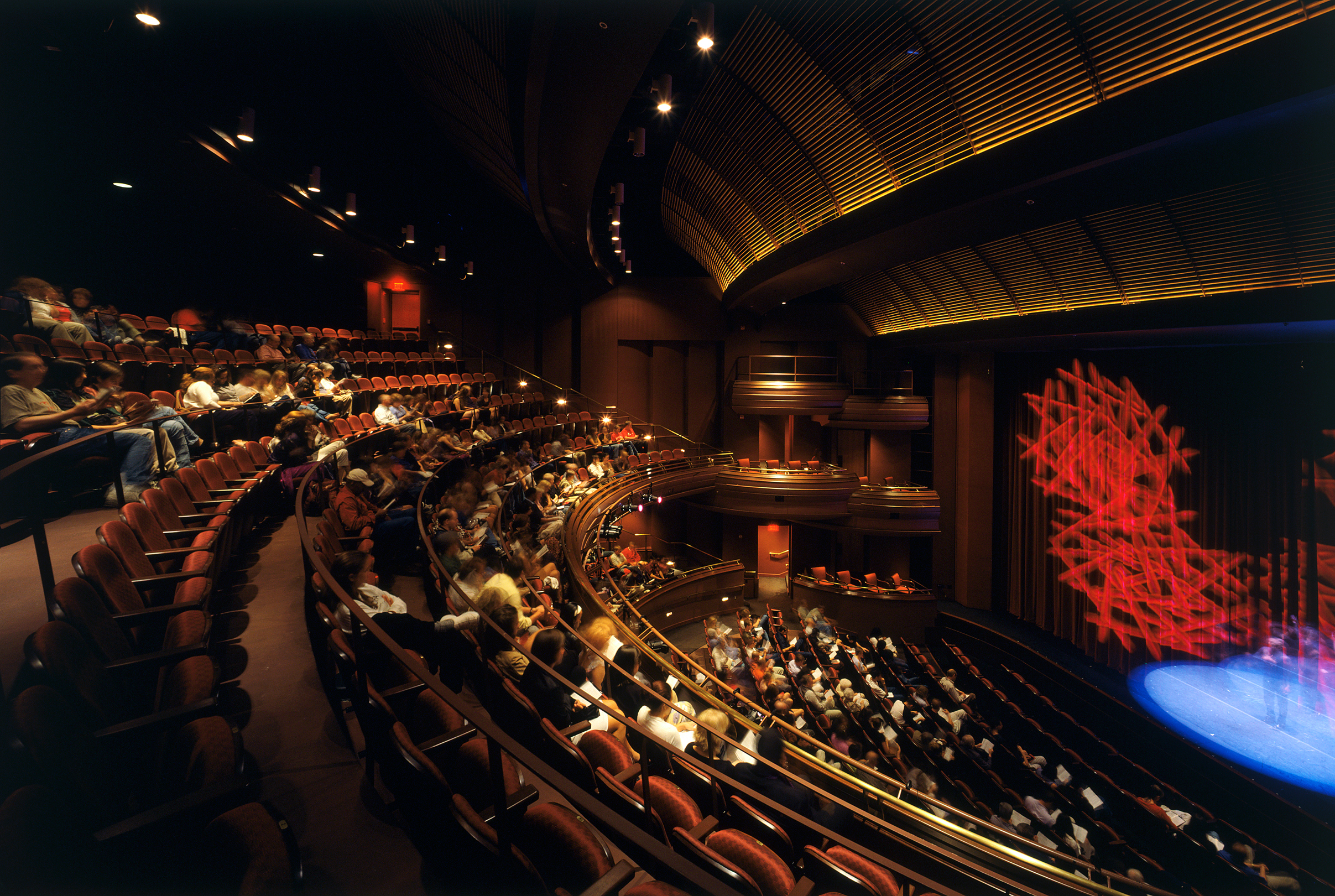
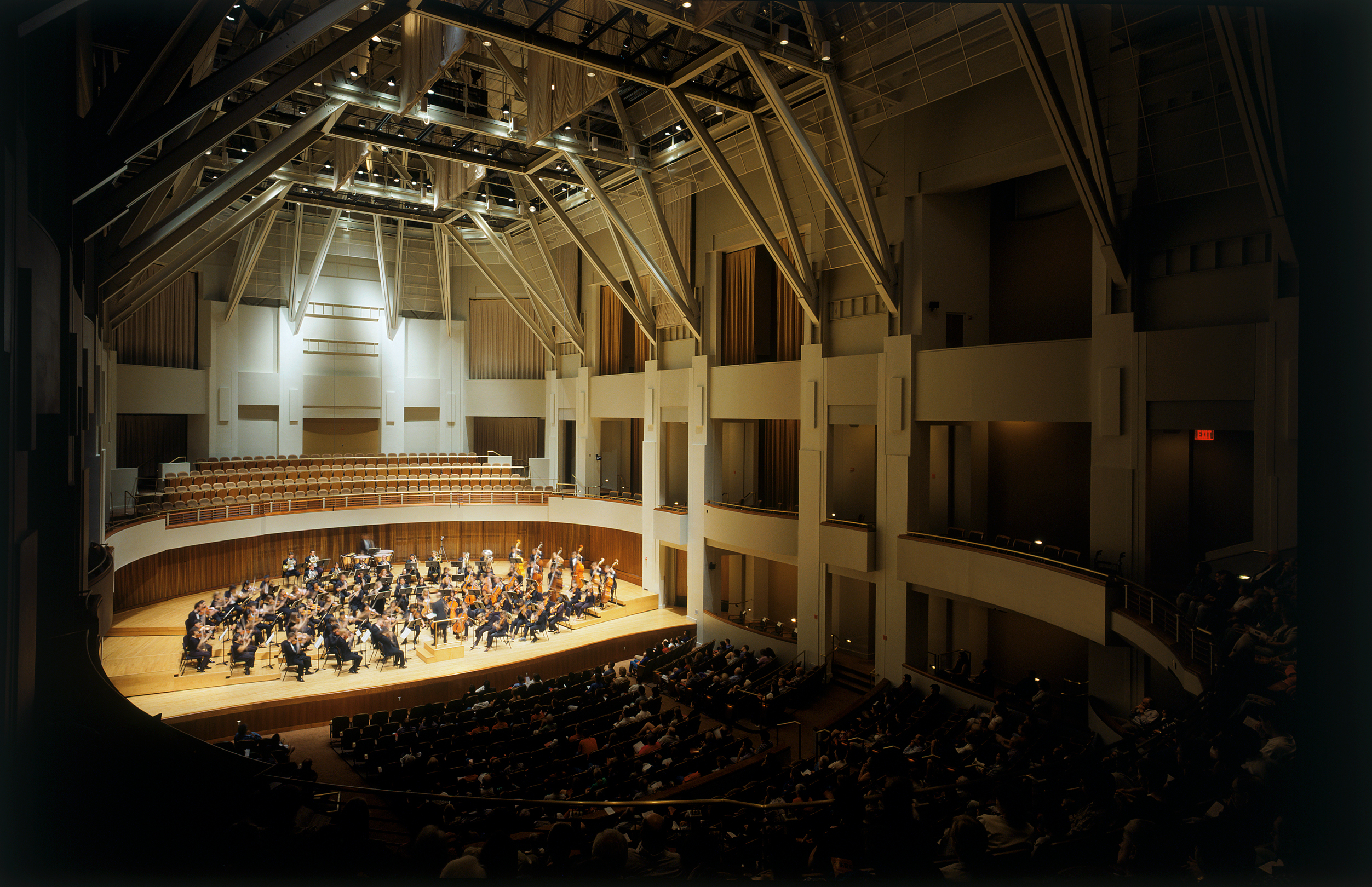
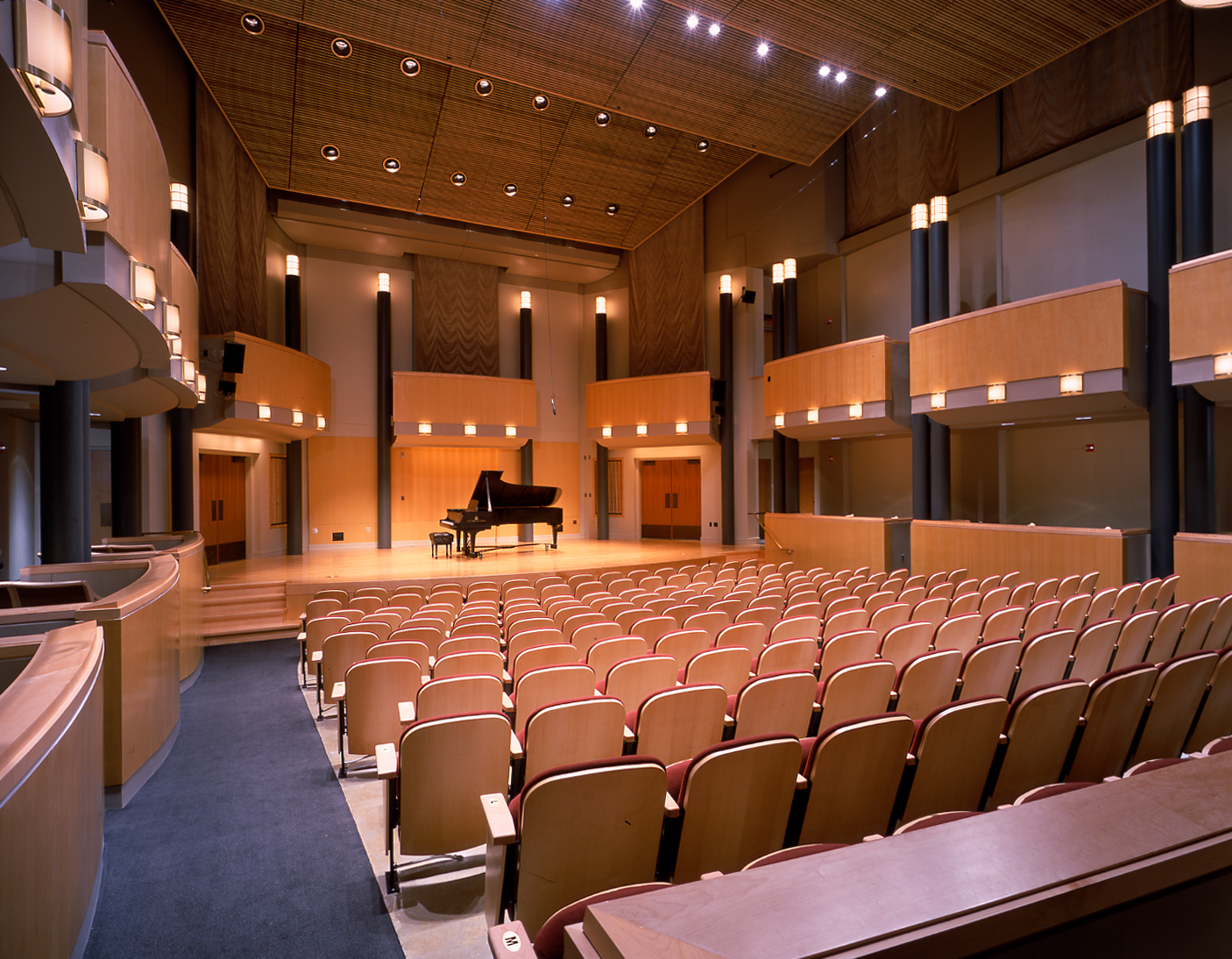
The performance halls of the Maryland Center for Performing Arts are shaped to encourage a close relationship between every member of the audience and the performers. They are places to enhance lively communication at an intimate scale. Each space has the potential for “tuning” or variable acoustics, with its basic geometry set to the most demanding acoustical response required. The Concert Hall, built high and relatively narrow with massive materials, surrounds a capacity audience with the sound produced by an orchestra and chorus. When smaller groups perform, interrelated systems of adjustable absorption elements adjust the acoustical response of the room for optimal conditions. In the Recital Hall, similar variable acoustics systems provide support for musicians and tailor the listening experience for the audience. In the Proscenium Theater, the fixed acoustical environment is oriented toward opera and ballet.
 Read Less

Werner Huthmacher
Werner Huthmacher
Werner Huthmacher
Werner Huthmacher
Alan Karchmer
- Role: Design Architect
- Building Area: 295,000 SF
- Site Area:
- :
- Cost: $107 M